What's the real cost of ongoing pool maintenance?
The first summer with a new pool tends to go smoothly. You are on top of the chemicals, the filter is running well and the water looks great. By the second or third year, the reality of what consistent pool ownership actually costs starts to come into focus. Chemicals, equipment servicing, unexpected repairs and the time involved all add up in ways that are not always obvious when you are standing in a showroom.
This article breaks down what pool owners actually spend across a year, where the hidden costs tend to appear and how DIY maintenance compares to professional servicing on both price and practicality.
Chemical Costs Are the Most Consistent Annual Expense
Pool chemicals are not a one-off purchase. Chlorine, pH adjusters, algaecides, stabilisers and clarifiers are consumed continuously throughout the year, with usage spiking significantly during summer when UV intensity accelerates chlorine breakdown and bather load increases. For most pools, chemical costs fall somewhere in the following ranges annually:
- Chlorine: $150 to $400 depending on pool size and whether you use liquid, granular or salt cell top-ups
- pH and alkalinity adjusters: $80 to $150 across a year of regular balancing
- Algaecides, clarifiers and shock treatments: $100 to $200 depending on how often issues arise
- Stabiliser (cyanuric acid): $50 to $100 for periodic top-ups
Getting the balance right matters as much as having the products on hand. Mismanaged water chemistry often leads to larger spending down the track, whether on corrective treatments or equipment damage caused by corrosive water.
Equipment Running Costs Add Up Quietly in the Background
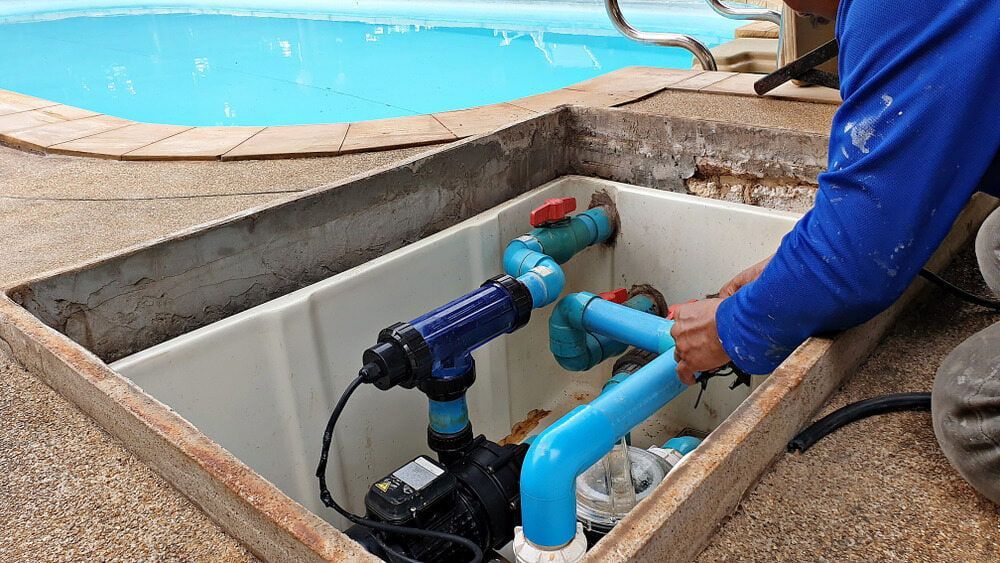
Your pump, filter, chlorinator and any heating equipment run continuously or on a timer throughout the year. The electricity those systems consume is a real cost that many pool owners underestimate when calculating their annual spend. A standard pool pump running six to eight hours per day can add $400 to $800 per year to your power bill depending on its age and energy rating. Additional equipment costs to factor in include:
- Filter media replacement (sand or glass) every three to five years: $150 to $300
- Salt cell replacement for saltwater pools every four to seven years: $400 to $800
- Pump seal or basket replacements as components wear: $50 to $200 per occurrence
- Timer and controller replacements if automation systems develop faults
Newer variable-speed pumps use significantly less power than older single-speed models, so equipment upgrades can reduce ongoing running costs over time.
What Does a Professional Pool Service Actually Cost Per Year?
Professional pool servicing typically involves a technician visiting on a regular schedule, testing and balancing the water, checking equipment, cleaning filters and identifying any issues before they develop into costly repairs. Depending on visit frequency and what is included, annual professional servicing costs generally range from $600 to $1,500 or more. Factors that influence the price include:
- Visit frequency: fortnightly servicing costs more annually than monthly but maintains more consistent water quality
- Pool size and type: larger pools or those with more complex equipment require more time per visit
- Whether chemicals are supplied by the service provider or purchased separately
- Any additional tasks included such as filter backwashing, salt cell cleaning or equipment inspection
For homeowners who would rather leave it to the experts,
pool maintenance in Bundaberg covers chemical balancing through to equipment checks on a schedule that suits the pool and the season.
DIY Maintenance Can Cost Less, But the Gap Is Smaller Than You Think
Handling your own pool maintenance avoids the labour component of professional servicing, but the chemical and equipment costs remain largely the same. The real variable is time, and whether the time invested consistently delivers the same water quality outcome. A realistic DIY cost breakdown looks something like this:
- Chemicals purchased retail: typically 20 to 40 percent more expensive per unit than trade pricing
- Testing kits or digital testers: $30 to $150 upfront with ongoing reagent costs
- Time invested: one to two hours per week across the swimming season
- Corrective treatments when balance is missed: $50 to $200 per incident depending on severity
If you are handling maintenance yourself, the guide to
8 essential pool maintenance tips is a useful reference for what needs to happen and how often to keep on top of it without letting things drift.
The Hidden Costs That Catch Pool Owners Off Guard
Beyond the predictable recurring expenses, a number of costs tend to appear unexpectedly, particularly for pool owners who have let maintenance slip or are working through the normal wear cycle of their equipment. These are the figures that tend to surprise people most:
- Pump repairs or replacement: $300 to $1,200 depending on the fault and whether the unit can be repaired
- Green pool remediation: $150 to $400 for chemical treatment and labour, more if the pool needs draining
- Tile or surface repairs as the pool interior ages or is damaged by imbalanced water
- Fence compliance upgrades if pool barrier regulations change or inspections identify issues
Many of these costs are preventable with consistent maintenance.
Pool servicing Bundaberg homeowners book regularly is one of the more reliable ways to catch equipment issues and water chemistry problems before they compound.
Seasonal Demand Changes What You Spend and When
Pool maintenance costs are not evenly distributed across the year. Summer brings higher chemical consumption, more frequent cleaning and greater equipment load. Winter typically requires less active management but is not cost-free. Seasonal spending patterns generally break down like this:
- Summer: highest chemical use, most frequent skimming and filter cleaning, increased electricity consumption
- Autumn: leaf and debris load increases, more frequent basket emptying and filter backwashing required
- Winter: reduced chemical use but water still needs periodic testing and balancing to prevent algae
- Spring: often requires a full water test, corrective balance treatment and equipment check before the season starts
Planning for seasonal variation rather than assuming a flat monthly cost gives a more accurate picture of total annual spend.
Older Pools Carry Higher Maintenance Costs Than New Ones
A pool that is ten or more years old is likely running on equipment that is approaching the end of its service life, and may have a surface finish that requires more chemical input to maintain stable water chemistry. Age-related cost increases tend to include:
- More frequent pump and filter servicing as components wear and efficiency drops
- Higher chemical consumption from aged or porous interior surfaces that absorb and deplete sanitiser
- Increased likelihood of equipment failure requiring emergency repair or replacement
- Possible resurfacing costs if the interior finish has deteriorated beyond effective maintenance
Understanding where your pool sits in its lifecycle helps you anticipate what is coming rather than being caught out by repair costs that were predictable with a bit of forward planning.
Comparing Total Annual Costs: DIY vs Professional Servicing
When you add up chemicals, electricity, equipment maintenance and the time involved, the total annual cost of pool ownership is higher than most people realise going in. A rough comparison of total yearly spend tends to look like this:
- DIY maintenance: $1,200 to $2,000 per year including chemicals, power and equipment upkeep
- Professional servicing with chemicals supplied: $1,500 to $2,500 per year depending on frequency and inclusions
- Professional servicing with owner-supplied chemicals: $800 to $1,400 for labour and visits only
The cost difference between DIY and professional servicing narrows considerably once you account for retail chemical pricing, the time invested and the corrective costs that tend to arise when water balance is managed less consistently.
Want to Know What Regular Maintenance Would Cost for Your Pool?
We at Aqualine Pools work with pool owners across the Bundaberg region who are at exactly this point, weighing up what they are currently spending against what a consistent, professionally managed service would cost them. Bundaberg's climate means pools work hard, UV intensity drives up chemical demand during the warmer months and equipment takes a real load across a long swimming season. Those factors make consistent maintenance more important here than in cooler parts of the country.
If you want a clear picture of what a regular plan would look like for your specific pool,
contact us for a quote and we will work through the details with you. No guesswork, just a straightforward breakdown based on your setup.